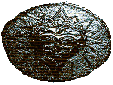
|
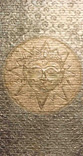
the ‘Surya’ embossed on brass
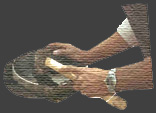
making dies for embossing
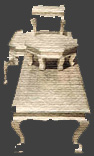
coffee table and chowki
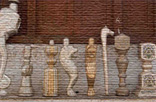
patra work legs of different shapes
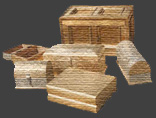
jewellery boxes and petis
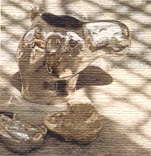
sand casted animal heads
|
Udaipur, the romantic city of palaces, temples, fountains, lakes and gardens
has been described as the ‘City of Sunrise’, and the ‘Venice of the East’ It was founded in 1559 by Maharana Udai
Singh. The city is a major tourist spot and a substantial part of its economy depends on tourism. It has the largest
number of craftsmen making Patra furniture, that is out of white metal and brass sheets combined with wood. It
is also known for the local manufacture of wooden toys, engravings and paintings, silver jewellery, damascening
and meenakari.
Udaipur has approximately eighteen workshops which handcraft patra furniture.
The Place
Udaipur is one of the larger cities of Rajasthan. As it is a
major tourist attraction, it is well connected with the rest of the country. RSRTC buses run to most places in
the vicinity, while there are trains to most parts of Rajasthan, as well as other nearby towns. The superfast Garib
Nawaz Express runs daily to Delhi via Jaipur. Udaipur also has an airport, and there are regular flights to Delhi,
Bombay, etc.
The People
The majority of the population consists of Rajputs and Marwaris.
Most of the craftsmen are Parihars. The craftsmen here are more affluent than their contemporaries in the other
centres. Most of the people here work in carpentry and marble inlay. They are firm devotees of Shrinathjee, of
the Nathdwara temple.
The Craft
Patra literally means sheet. Earlier, silver and brass sheets
were sued to make patra furniture. The craft basically involves making dies for embossing, casting and woodwork.
Most of the products are decorative, lightweight and poorly detailed, rendering it outwardly beautiful, but lacking
in utility. The patra craftsmen generally produce chairs, various tables, chowkis, petis, jewellery boxes, doors,
etc.
The motifs that they normally use are based on Mughal and English patterns, or they are copied from books. Most
of the time they create the patterns based on their clients’ demands.
Raw Material and Tools
The raw material required are brass and white metal sheets (38
or 40 gauge thickness). These are procured from the local markets. Fevicol, nails, rubber solution, lead, tar and
sand are the other necessities which are also available locally.
The woodworking tools are like those used elsewhere. A kalam is used to cut brass dies, while a chapan is for curvi-lineared
patterns. Taklas are used for punching holes. Brasso and other polishes are used to finish the products.
The Market
Unlike the craftsmen at the other places, a lot of those in Udaipur
deal directly with their clients. Most of the craftsmen working in an unit are part of the owners’ family.They
export most of the products to Belgium, Italy, Kuwait, and the United Kingdom. They also supply to the handicraft
emporia all around the country. The local market is not very well developed.
Problems and Suggestions
The products of this region are tacky looking, badly detailed
and unfinished, though highly ornamental. The products are neither sturdy nor functional, and therefore are not
suited for the no-nonsense modern interiors. There is also a lack of local demand.
A designer would be able to provide help by improving the utility value, the aesthetics and the structural stability
of these products, making them suitable for the local market where it can create a niche for itself, as well as
improve their standing in the outside world. |